
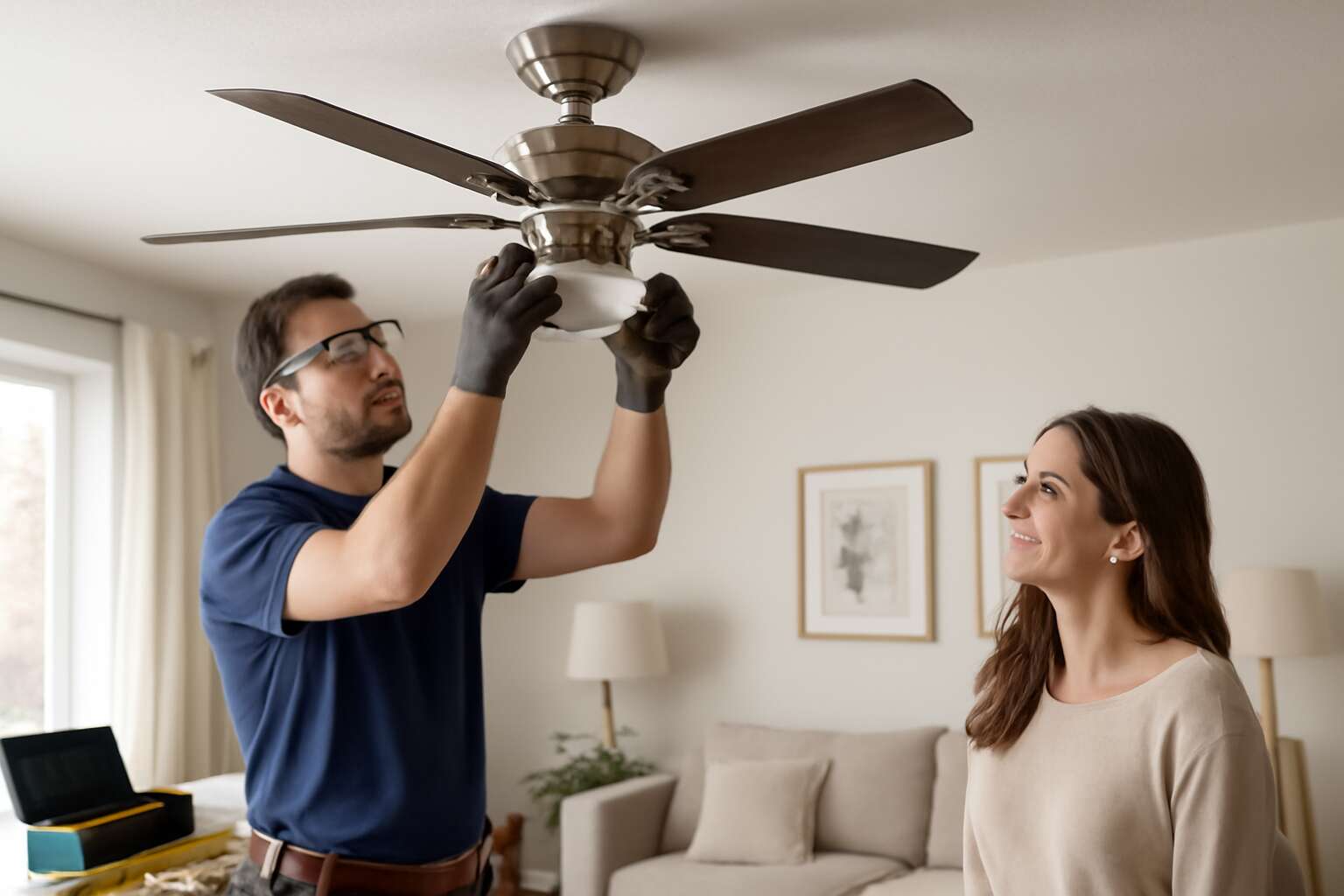
Benefits of Hiring a Skilled Handyman for Ceiling Fan Installation
Professional Safety and Compliance – Ensuring safety standards are met during installation
In a world where safety often takes a backseat to convenience, entrusting a professional handyman to install ceiling fan becomes an act of resilience and wisdom. The risks associated with improper installation—electrical mishaps, structural failures—are not mere exaggerations but stark realities that underscore the importance of expertise. When a skilled handyman approaches ceiling fan installation, they do more than attach blades; they meticulously adhere to safety and compliance standards rooted in local electrical codes and industry best practices.
Ensuring safety during installation isn’t just about avoiding shocks; it’s about preserving the sanctity of your home. A reputable handyman understands the nuances of electrical wiring, grounding systems, and load-bearing considerations unique to South African homes. This knowledge translates into peace of mind, knowing that every connection is secure and compliant with legal standards.
Choosing a handyman to install ceiling fan isn’t simply about convenience—it’s an investment in safety, durability, and long-term functionality. It’s a decision rooted in respect for craftsmanship, where each bolt and wire is handled with precision, ensuring your comfort doesn’t come at the expense of safety.
Expertise and Precision – Accurate and efficient setup of your ceiling fan
When it comes to installing a ceiling fan, precision is everything. A skilled handyman to install ceiling fan brings more than just basic tools; they bring a deep understanding of the intricate wiring, load calculations, and structural considerations that can make or break the longevity of your fan. Their expertise ensures that every blade is balanced perfectly and every connection is secure, reducing the risk of wobbling or failure down the line.
Choosing a professional for ceiling fan installation means you’re investing in craftsmanship rooted in experience. They approach each project with meticulous attention to detail, making sure no corner is cut and every safety measure is respected. This dedication translates into a quieter, more efficient fan that provides comfort for years—that’s the difference a true expert can make.
- Accurate wiring connections to prevent electrical issues
- Proper mounting techniques that support long-term durability
- Ensuring compliance with local electrical standards and safety protocols
By hiring a reliable handyman to install ceiling fan, you’re not just saving time—you’re safeguarding your home and your peace of mind. It’s a heartfelt reminder that when it comes to essential home improvements, expertise and precision are worth every cent.
Time and Cost Savings – Avoiding costly mistakes and saving time
In the shadowed corners of home improvement, where mistakes lurk like silent specters, hiring a skilled handyman to install ceiling fan becomes a safeguard against costly errors. A master of their craft understands the delicate dance of wiring, load-bearing structures, and precise alignment—each step a vital note in the symphony of safe installation.
Time is a precious commodity, and an expert’s touch ensures your project is completed swiftly, without sacrificing quality. In the hands of a seasoned professional, what might take days becomes a matter of hours, freeing you from the burden of trial and error.
The true advantage lies in avoiding the unforeseen—an electrical mishap, a wobbling blade, or a compromised mount that could haunt your home for years. Investing in a handyman to install ceiling fan not only preserves your peace of mind but also preserves your home’s integrity and longevity.
Additional Services Offered – Complementary home improvement tasks
Engaging a skilled handyman to install ceiling fan offers more than just a seamless setup; it unlocks a realm of additional benefits that transform your home improvement experience. With a keen eye for detail and a steady hand, a professional can also tackle a variety of complementary tasks that elevate your living space. From mounting light fixtures to securing wall-mounted units, the versatility of a handyman to install ceiling fan is invaluable in creating a cohesive, polished look.
By choosing a seasoned expert, you open the door to a suite of ancillary services, including:
- Electrical rewiring and upgrades
- Installing dimmer switches or smart home integrations
- Fixing ceiling cracks or drywall damage
This flexibility means your home improvement journey doesn’t have to be a series of disjointed projects. Instead, it becomes a carefully orchestrated process—done efficiently and with precision. When a handyman to install ceiling fan is involved, your entire space benefits from expert attention to detail, ensuring durability and aesthetic harmony that lasts for years to come.
Key Factors to Consider When Choosing a Handyman for Ceiling Fan Installation
Experience and Qualifications – Verifying handyman’s expertise in ceiling fan installation
When seeking a handyman to install ceiling fan, expertise isn’t just a bonus—it’s the foundation of a flawless job. A seasoned professional brings more than just tools; they bring a nuanced understanding of electrical systems, structural nuances, and safety protocols that can turn a potentially hazardous task into a seamless operation. Verifying the handyman’s qualifications ensures you’re entrusting your home to someone with proven experience, reducing the risk of costly errors or safety mishaps.
In South Africa’s diverse housing landscape, choosing someone with a genuine track record in ceiling fan installation can make all the difference. Look for a handyman to install ceiling fan who can demonstrate previous projects or provide references that speak to their skill and reliability. Don’t hesitate to ask about their specific experience with different fan models or electrical configurations—these details reveal their true expertise. Remember, a well-qualified handyman doesn’t just install; they install with precision and confidence, giving you peace of mind that your home is in capable hands.
Licensing and Insurance – Importance of proper licensing and insurance coverage
Choosing a licensed and insured handyman to install ceiling fan isn’t just a smart move—it’s essential. Proper licensing proves they meet South Africa’s regulatory standards, ensuring they possess the necessary skills and knowledge. Insurance, on the other hand, protects you from liability if accidents happen during installation. Without it, you could be left footing the bill for damages or injuries.
Always ask for proof of licensing and insurance before hiring. It’s a simple step that safeguards your home and peace of mind. In a landscape as diverse as South Africa’s housing market, verifying these credentials helps weed out unqualified or unreliable handymen. Remember, a well-insured, licensed handyman to install ceiling fan is a professional who meets industry standards and prioritizes safety. Don’t compromise on these key factors—they’re the foundation of a smooth and secure ceiling fan installation process.
Customer Reviews and Testimonials – Assessing reliability through previous client feedback
When selecting a handyman to install ceiling fan, customer reviews and testimonials are invaluable. They offer a glimpse into the reliability and professionalism of the service provider, often revealing more than formal credentials ever could. In South Africa’s bustling housing market, firsthand accounts from previous clients help you gauge whether a handyman truly delivers on their promises.
Real feedback uncovers the consistency of their work, punctuality, and how they handle unforeseen issues during installation. It’s a straightforward way to filter out unqualified or unreliable handymen, saving you time and potential headaches.
Sometimes, a simple online review or a recommendation from a neighbor can be the difference between a smooth installation process and a costly mistake. Remember, a trusted handyman to install ceiling fan isn’t just about affordability—they’re about proven reliability and quality. Trusting previous customer experiences can help ensure your ceiling fan is installed safely, efficiently, and to your satisfaction.
Pricing and Estimate Transparency – Understanding costs upfront
In the shadowed corridors of home improvement, transparency in pricing emerges as a beacon of trust. When seeking a reliable handyman to install ceiling fan, the murky waters of hidden costs can quickly turn a simple task into a financial nightmare. Clarity from the outset, with detailed estimates and upfront quotes, is the armor that shields you from unwelcome surprises. It’s not just about the price—it’s about understanding what you pay for and ensuring that no additional charges lurk in the darkness after the work begins.
To better navigate this labyrinth, consider requesting a comprehensive breakdown of all costs involved. An honest handyman to install ceiling fan will often provide a clear, itemized estimate—covering parts, labor, and any unforeseen expenses that could arise during installation. Remember, transparency isn’t just a courtesy; it’s a testament to their integrity and professionalism. In the end, a well-informed client is a satisfied one, assured that their investment is safeguarded from the shadows of ambiguity.
Step-by-Step Process for Installing a Ceiling Fan with a Handyman
Initial Assessment and Planning – Evaluating existing wiring and ceiling condition
Installing a ceiling fan may seem straightforward, but beneath its seemingly simple surface lies a web of electrical intricacies and structural considerations. Before any tools are put to work, a thorough initial assessment by a qualified handyman to install ceiling fan is essential. This step unveils potential challenges—whether the existing wiring is compatible or if the ceiling structure can support the fan’s weight. A keen eye for detail during this phase can prevent costly mishaps down the line.
During the planning stage, the handyman evaluates the existing wiring and ceiling condition, ensuring safety and functionality. This process often involves inspecting the electrical box to confirm it can handle the fan’s load and determining if additional wiring or reinforcement is necessary. Sometimes, an upgrade is required to meet local electrical standards or to accommodate modern ceiling fan models, especially in older homes where wiring may be outdated.
In many cases, the handyman to install ceiling fan will create a checklist, which might include:
- Assessing the ceiling joists for stability
- Checking the electrical wiring compatibility
- Identifying the appropriate mounting hardware
- Planning for any necessary upgrades or reinforcement
Only after this meticulous evaluation can the installation proceed smoothly, ensuring a safe, efficient, and long-lasting fixture that transforms space and ambiance with confidence and precision.
Preparing the Space – Clearing the area for safe installation
Preparing the space before a ceiling fan installation is akin to setting the stage for a magical performance—everything must be in perfect harmony for the show to proceed seamlessly. A skilled handyman to install ceiling fan begins by clearing the area, removing furniture, and protecting nearby surfaces with drop cloths or masking tape. This creates a safe, unobstructed zone where tools can dance freely without risking damage or injury.
Ensuring a clutter-free environment not only fosters safety but also allows the handyman to work with precision and confidence. In some cases, it’s beneficial to temporarily turn off the power at the circuit breaker to eliminate any risk of electrical mishaps during the process. With the space meticulously prepared, the next step involves inspecting the ceiling and electrical box, setting the foundation for a flawless installation that will last for years to come.
Ceiling Fan Assembly – Assembling the fan components before installation
Once the space is meticulously prepared, the next crucial phase is assembling the ceiling fan components before the installation process. A seasoned handyman to install ceiling fan approaches this task with a meticulous eye for detail, knowing that the quality of assembly directly influences performance and longevity. Carefully unpacked, each part—blades, motor housing, mounting bracket, and electrical components—is laid out in an organized manner, transforming chaos into clarity.
This pre-assembly stage often involves following the manufacturer’s instructions or technical diagrams, ensuring each piece fits perfectly. For those unfamiliar, a simple
- step-by-step assembly
can make all the difference. The blades are attached to the motor, the mounting bracket secured, and the wiring prepared, all in a harmonious dance of precision. When this groundwork is laid with care, the installation becomes a seamless performance—an elegant symphony of craftsmanship that promises years of reliable comfort.
Electrical Wiring and Mounting – Connecting the fan to the electrical box securely
In the realm of transforming a humble room into a sanctuary of comfort, the act of installing a ceiling fan stands as a pivotal enchantment. Once the careful pre-assembly of the fan components is complete, the next phase involves connecting the fan to the electrical box with the precision and grace of a master craftsman. This step is more than mere technicality; it’s the moment where the magic of cooling and airflow is woven into the fabric of your home.
A seasoned handyman to install ceiling fan approaches this task with a steady hand and a keen eye for detail. The electrical wiring must be connected securely, ensuring that each wire is matched perfectly—hot to hot, neutral to neutral, ground to ground—creating a harmonious flow of energy. This meticulous process often involves removing the existing fixture, inspecting the electrical box for stability, and then carefully attaching the mounting bracket. To facilitate a smooth installation, the handyman may follow an ordered sequence:
- Turn off the power at the circuit breaker to ensure safety.
- Remove the existing light fixture, exposing the electrical box.
- Secure the mounting bracket to the electrical box, verifying stability.
- Connect the wiring harness from the ceiling fan to the house wiring, ensuring tight and secure connections.
- Attach the fan motor to the mounting bracket, confirming that it is firmly in place.
Throughout this process, safety remains paramount. A professional handyman to install ceiling fan always double-checks that the wiring is properly insulated and that the connections are tight, preventing any future electrical issues. Once the fan is mounted securely and wired correctly, the final step involves restoring power and testing the fan’s operation. When executed with expertise, this phase transforms an ordinary ceiling into a conduit of comfort, ready to bring cool breezes and aesthetic elegance into your South African home.
Testing and Final Adjustments – Ensuring proper operation and looking for wobbling or noise
Once the ceiling fan is mounted and wired, the next critical step is testing and final adjustments. A skilled handyman to install ceiling fan understands that this phase determines the entire comfort and safety of your living space. Carefully, they restore power at the circuit breaker, then turn on the fan to observe its operation.
During this process, they look for wobbling or unusual noise, which could indicate misalignment or loose connections. To ensure smooth airflow and quiet operation, the handyman might make minor adjustments to the fan blades or mounting bracket.
A thorough inspection involves checking that all screws and bolts are tight, the blades are balanced, and the fan runs without vibration. This meticulous attention to detail guarantees not only optimal performance but also longevity. When this final step is executed with expertise, it transforms your room into a haven of cooling comfort—an achievement only a professional handyman to install ceiling fan can deliver.
Common Challenges Faced During Ceiling Fan Installation and How a Handyman Can Address Them
Uneven Ceiling Surface – Adjustments for stable mounting
Ceiling surfaces aren’t always perfectly flat, a common challenge that can complicate ceiling fan installation. An uneven ceiling surface may cause wobbling or unstable mounting if not addressed properly. This is where a skilled handyman to install ceiling fan makes all the difference. They know how to evaluate the ceiling’s condition and make necessary adjustments to ensure a secure, balanced fit. Sometimes, minor modifications like shimming or smoothing out rough patches are enough to create a stable mounting point.
Ignoring these irregularities can lead to issues down the line, such as noisy operation or even fan damage. A professional handyman can identify potential problem areas early and use appropriate techniques to level the surface. This proactive approach guarantees that the ceiling fan functions smoothly and safely, saving time and avoiding costly repairs later. When it comes to ceiling fan installation, trusting an experienced handyman ensures the job is done right the first time, even on challenging surfaces.
Incompatible Wiring or Electrical Issues – Resolving wiring complications
Electrical wiring issues can turn a straightforward ceiling fan installation into a complex puzzle. Faulty or incompatible wiring isn’t just a minor inconvenience; it can pose serious safety hazards and jeopardize the longevity of your fan. This is where a skilled handyman to install ceiling fan becomes invaluable. Their expertise allows them to diagnose wiring problems swiftly, ensuring everything connects correctly and safely. Sometimes, the wiring may be outdated, or the electrical box might not meet current standards, requiring expert intervention.
Addressing these electrical complications early prevents future frustrations—such as flickering lights, short circuits, or even electrical fires. A seasoned handyman will meticulously evaluate your existing wiring system, identify potential hazards, and implement appropriate solutions. This proactive approach guarantees your ceiling fan operates smoothly, safely, and efficiently, without the lurking threat of electrical failure. Trusting a professional isn’t just about convenience; it’s about peace of mind, especially when dealing with the intricacies of electrical wiring during ceiling fan installation.
Access Limitations – Overcoming tight or hard-to-reach spaces
Navigating the labyrinth of ceiling fan installation often reveals unexpected hurdles—tight spaces, obstructed ceilings, or awkward angles that challenge even the most confident DIY enthusiast. A seasoned handyman to install ceiling fan possesses not only the skill but the intuitive finesse to conquer these obstacles seamlessly. When space is limited or difficult to access, their expertise transforms a daunting task into a graceful dance of precision and care.
Overcoming access limitations is where experience truly shines. Whether it’s a narrow corner, a high vaulted ceiling, or a cluttered room, a professional handyman employs specialized tools and techniques to reach those hard-to-access spots. They meticulously prepare the area, ensuring safety and efficiency, so your ceiling fan installation proceeds without a hitch. This level of expertise guarantees that every component, from mounting brackets to wiring, is handled with the utmost care—delivering a finished product that’s both functional and visually impeccable.
In tight or complex spaces, patience and finesse are paramount. A skilled handyman to install ceiling fan knows how to maneuver in confined quarters, ensuring stability and safety while avoiding damage to your home’s delicate surfaces. Their nuanced approach turns what could be a frustrating challenge into a testament of craftsmanship, making sure your new ceiling fan not only looks stunning but also operates flawlessly for years to come. After all, the beauty of a well-installed ceiling fan is in the details—details that only a true professional can expertly address.
Matching Ceiling Fan Size to Room Dimensions – Selecting and installing the right fan
Ceiling fan installation often appears deceptively simple—yet lurking beneath the surface are common challenges that can turn a straightforward task into a labyrinth of complications. One of the most subtle hurdles is matching the ceiling fan size to the room dimensions, a delicate dance of proportion and function. Without an expert eye, selecting a fan that’s too small leaves the space feeling unbalanced, while an oversized model risks wobbling and noise.
A seasoned handyman to install ceiling fan possesses the intuitive finesse to navigate these nuances. They assess the room’s scale, ceiling height, and airflow needs, ensuring the fan’s dimensions harmonize perfectly with your space. Sometimes, the ceiling surface itself is uneven or obstructed, demanding delicate adjustments and specialized tools. Their skillful touch guarantees stability, quiet operation, and aesthetic grace—transforming your room into a sanctuary of comfort and style.
Maintenance Tips for Longevity and Efficient Performance of Your Ceiling Fan
Regular Cleaning – Maintaining blades and motor area
Ceiling fans are more than just a stylish addition—they’re essential in maintaining a cool and comfortable home, especially during South Africa’s sweltering summers. But like any mechanical marvel, their longevity depends on proper maintenance. Regular cleaning is the secret to keeping your ceiling fan performing at peak efficiency. Dust and debris can accumulate on blades and the motor area, causing imbalance and noise that disrupt your comfort.
To ensure your fan remains a silent guardian of your space, it’s wise to schedule periodic cleaning sessions. Gently wipe blades with a damp cloth, taking care not to bend or warp them. Don’t forget to clean the motor housing, which can harbor dust that hampers airflow. For those unsure about safely reaching high ceilings, hiring a trusted handyman to install ceiling fan who offers maintenance services can save you time and prevent accidents.
- Turn off the power supply before starting any cleaning.
- Use a soft cloth or a duster to remove surface dust.
- Check for wobbling or unusual noises after cleaning, indicating potential issues.
Maintaining your ceiling fan with these simple steps ensures its performance remains efficient and extends its lifespan, making every summer breeze a little cooler and a lot more reliable.
Balance and Wobbling Issues – Ensuring smooth operation
In the silent dance of a ceiling fan’s blades, there lies a delicate balance—one that can be disrupted by the slightest wobble or imbalance. Such issues are more than mere nuisances; they threaten the longevity of the fan and compromise its efficient performance. When a fan wobbles or squeaks, it’s often a sign that the blades are misaligned or that mounting points have shifted over time. Addressing these concerns requires a keen eye and steady hand—qualities that a skilled handyman to install ceiling fan brings to the table.
To preserve the serene hum of a well-functioning ceiling fan, regular maintenance is essential. Start by inspecting the blade alignment—uneven blades are a common culprit for wobbling. Carefully tighten any loose screws or fittings, but beware of overtightening, which could warp the blades. Balancing kits are invaluable tools; they help fine-tune the blades for even rotation. If the ceiling surface is uneven, a professional can adjust the mounting bracket for a more secure, stable fit, ensuring smooth operation for years to come.
Sometimes, the root cause of wobbling isn’t immediately visible. In such cases, an expert’s assessment becomes vital. They can check for issues like incompatible wiring, loose electrical connections, or structural anomalies that might be affecting the fan’s stability. When a homeowner invests in a trusted handyman to install ceiling fan, they’re also securing peace of mind—knowing that every wobble, every noise, will be addressed with precision and care. After all, a ceiling fan isn’t just a device; it’s an integral part of a home’s comfort, deserving of meticulous attention and thoughtful maintenance.
Electrical Checkups – Verifying wiring and connections periodically
Electrical checkups are the silent guardians of your ceiling fan’s longevity and efficiency. Over time, dust, vibrations, and environmental factors can subtly erode the integrity of wiring connections, leading to flickering lights, unexpected noise, or even safety hazards. Regular inspections ensure that your fan remains a seamless part of your home’s rhythm, whispering cool comfort without interruption.
When a professional handyman to install ceiling fan conducts these checkups, they meticulously verify every electrical connection—tightening loose wires, replacing worn-out connectors, and ensuring that the grounding is secure. Sometimes, the root of operational issues lies in incompatible wiring or hidden electrical faults, which only an expert can diagnose with precision. A routine inspection can prevent costly repairs and safeguard your home’s electrical system, preserving both safety and performance.
In addition to visual inspections, it’s wise to periodically test the fan’s switch and remote controls for responsiveness. If the fan exhibits inconsistent speed or strange noises, a skilled handyman can swiftly troubleshoot and resolve these anomalies, often before they escalate into more significant problems. After all, the heart of a well-maintained ceiling fan is a harmonious blend of electrical integrity and mechanical finesse—each dependent on vigilant care and expert oversight. This ongoing commitment not only prolongs the lifespan of your investment but also keeps your space beautifully cool and inviting for years to come.
Replacing Parts and Upgrades – When to consider upgrades or repairs
Ceiling fans are more than mere fixtures; they are the silent symphony of comfort whispering through your home. As time weaves its quiet magic, some parts may weaken or wear out, dimming the fan’s vibrant performance. When considering a handyman to install ceiling fan, understanding when to replace parts or upgrade can preserve its charm and efficiency. Parts like motors, blades, or remote controls often age gracefully, but can also become sluggish or noisy—signs that a subtle upgrade might be in order.
Upgrades don’t always mean replacing the entire fan. Sometimes, a simple component swap can breathe new life into your device, enhancing energy efficiency and reducing noise. For instance, installing a more modern, energy-saving motor or upgrading to smarter remote controls can make a noticeable difference. When the blades become warped or the motor struggles to spin smoothly, it’s time to seek expert assistance from a skilled handyman to install ceiling fan. They can evaluate whether a repair or a full replacement is the most prudent choice, ensuring your cooling oasis remains unblemished.
- Assess the age and condition of your current ceiling fan.
- Identify any recurring issues like wobbling, noise, or inconsistent speeds.
- Consult a professional to determine if parts can be replaced or if an upgrade would serve better.
With their expertise, a handyman to install ceiling fan can source quality replacement parts, ensuring longevity and peak performance. Whether it’s a new set of blades that align perfectly or a more advanced control system, the right upgrades can transform your space into a sanctuary of cool comfort. The magic lies in knowing that timely repairs and thoughtful enhancements are the secret spells to prolong your ceiling fan’s lifespan and elevate your home’s ambiance.
Cost and Pricing for Hiring a Handyman to Install a Ceiling Fan
Average Installation Costs – Typical price range and what it includes
Hiring a handyman to install a ceiling fan typically costs between R1,500 and R3,000 in South Africa. This price range covers the full scope of the service, including assessing existing wiring, preparing the space, assembling the fan, connecting electrical components, and testing for safe operation. The variation depends on factors like ceiling height, fan complexity, and the condition of the current electrical setup.
Many professionals also include additional services such as adjusting for uneven ceiling surfaces or resolving electrical issues, which can influence the overall cost. To avoid surprises, it’s wise to request a detailed quote upfront. Reliable handyman services often provide transparent pricing, ensuring clients understand the scope and expense associated with their ceiling fan installation. Remember, investing in a skilled handyman to install ceiling fan not only ensures safety but also prolongs the lifespan of your appliance, saving money in the long run.
Factors Affecting Price – Complexity, location, and fan type
Certainly! Here’s a captivating and SEO-optimized content piece about “Cost and Pricing for Hiring a Handyman to Install a Ceiling Fan,” tailored for South African readers:
When it comes to transforming a room with a simple ceiling fan, the price tag can sometimes feel like a mystery wrapped in an enigma. The average cost for a handyman to install a ceiling fan in South Africa ranges from R1,500 to R3,000, but several factors influence this variation. The intricacy of the installation, the height of your ceiling, and the type of fan chosen all play pivotal roles in shaping the final bill.
For instance, more complex installations—such as those requiring electrical rewiring or modifications for uneven ceiling surfaces—can push costs higher. On the other hand, straightforward setups in accessible spaces tend to fall closer to the lower end of the spectrum. The key is understanding that every project is unique; hence, a detailed quote from your handyman to install ceiling fan ensures transparency and clarity from the outset. This not only safeguards your budget but also guarantees a seamless installation experience.
In South Africa, the decision to hire a handyman to install ceiling fan often hinges on the scope of work and specific room conditions. When selecting a professional, consider their experience with ceiling fan assembly, electrical wiring, and mounting techniques. An adept handyman can navigate tight spaces or resolve electrical issues efficiently—saving you both time and money while ensuring safety and longevity of your investment.
Tips for Getting Accurate Quotes – Questions to ask before hiring
When inviting a handyman to install ceiling fan, clarity about costs ensures peace of mind and a successful project. With the average installation cost in South Africa ranging from R1,500 to R3,000, understanding what influences this variation is crucial. Before signing on the dotted line, it’s wise to ask specific questions that illuminate the scope and potential surprises of the job.
Questions such as, “Does this price include electrical wiring and mounting?” or “Are there additional charges for ceiling height or complex wiring?” can reveal important details. An experienced handyman to install ceiling fan will appreciate a thorough initial assessment—evaluating existing wiring, ceiling condition, and space accessibility—to provide an accurate quote. This transparency not only helps avoid unexpected expenses but also fosters trust and ensures the installation proceeds smoothly.
Keep in mind, selecting the right professional involves more than just price. Verifying their experience and qualifications, along with checking customer reviews, can prevent costly mistakes and ensure your ceiling fan is both safe and durable. Remember, a detailed estimate coupled with clear communication is the foundation for a flawless ceiling fan installation experience in South Africa.




0 Comments