
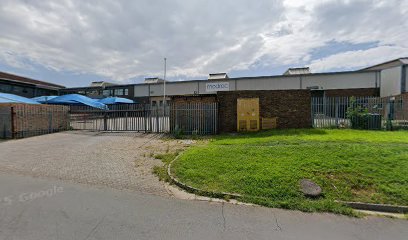
Light Kinetics (PTY) Ltd. is a Lighting manufacturer establishment in Johannesburg, Gauteng, South Africa
Johannesburg
Gauteng
South Africa
Lighting Manufacturer Services in Johannesburg, Gauteng
Lighting manufacturers in Johannesburg offer a range of services tailored to commercial, industrial, and residential sectors across Gauteng. The city’s dynamic business environment, coupled with a growing emphasis on energy efficiency and modern aesthetics, drives demand for custom and off-the-shelf lighting solutions. This article outlines the typical services encountered, what customers can expect, and practical considerations when engaging this sector in Johannesburg.
Across the region, lighting manufacturers provide design consultation to translate architectural intent into functional illumination. This often includes evaluating interior layouts, considering daylight integration, and recommending luminaires that meet both visual and performance criteria. Designers and engineers may assess colour temperature, colour rendering, luminance levels, glare control, and the impact of lighting on energy consumption. The result is usually a specification package that can guide procurement and project execution.
Manufacturers commonly offer product ranges that cover decorative, architectural, and functional lighting. These can include downlights, track lighting, linear fixtures, battens, panel lighting, exterior luminaires, and specialised solutions for warehouses, offices, retail spaces, and hospitality venues. Some clients look for scalable systems suitable for large developments, while others require compact solutions for small offices or retail outlets. In many cases, modular or adjustable options are preferable to accommodate evolving space plans.
Customisation is a frequent phase of service in Johannesburg. Manufacturers may modify luminaires to meet specific voltage, mounting constraints, or environmental considerations such as dust and moisture exposure. Custom orders can extend to finishes, beam angles, control compatibility, and housing materials. While exact capabilities vary, the emphasis is on delivering a solution that harmonises with architectural design and operational demands.
Electrical integration and control systems form an important part of the offering. Lighting manufacturers often collaborate with electrical contractors to ensure seamless installation. This includes compatibility with dimming systems, occupancy sensors, daylight harvesting links, and smart control protocols where appropriate. In urban centres, where power reliability and load management are critical, coordination around fuse sizing, circuit distribution, and backup lighting strategies is a practical consideration.
Manufacturing timelines and project logistics are a practical focus for clients in Johannesburg. Lead times can depend on whether a standard range is sufficient or custom design work is required. On-site assessments may be conducted to confirm mounting heights, spacing, and electrical connections, followed by prefabrication or sample production for client review. Quality assurance processes typically cover finish consistency, electrical testing, and compliance with local standards where applicable.
Energy efficiency and sustainability feature prominently in the Johannesburg market. Clients often seek luminaires designed to maximise lumens per watt, reduce maintenance costs, and extend service life. This may involve selecting LED solutions, high-efficiency drivers, and materials suitable for the local climate. Considerations also include thermal management, ease of maintenance, and the potential for retrofitting existing installations without extensive rewiring.
Practical considerations for engaging a lighting manufacturer in Johannesburg include: verifying warranties and after-sales support, understanding installation requirements, and confirming compatibility with existing electrical infrastructure. It is prudent to obtain documentation on product specifications, performance data, and any certifications relevant to local building regulations. Local supply chains and logistics should be considered for timely delivery and predictable project scheduling.
A typical engagement path begins with an initial brief and site visit or virtual assessment, followed by a conceptual design and cost estimate. This is usually refined into formal proposals with clear scope, timelines, and performance criteria. Once approved, manufacturing and delivery proceed, culminating in installation coordination and post-installation checks to ensure the finished result aligns with the original intent.
Sorry, no records were found. Please adjust your search criteria and try again.
Sorry, unable to load the Maps API.