
Common Home Repair Tasks
Patching Drywall and Cracks
Patching drywall is rarely glamorous, yet it defines many handyman responsibilities. A single crack in a Johannesburg ceiling can signal settling foundations or just years of temperature swings. Homeowners often notice hairline fractures near door frames and ignore them until paint begins to flake. The repair requires patience, a clean blade, and joint compound applied in thin layers. Sanding between coats prevents ridges.
What makes this task tricky is the surface’s hidden history. Old plaster behaves differently than modern gypsum. Some walls contain lath and need mesh tape; others respond better to paper tape. Here are the variables a handyman must assess:
- moisture exposure behind the wall
- depth of the crack
- texture match after drying
Each variable changes the approach. Professional judgement separates a lasting fix from a temporary cover. That attention to detail is the essence of handyman responsibilities.
Fixing Leaky Faucets and Pipes
A dripping tap in a Johannesburg home can waste thousands of litres a year, yet many homeowners postpone the repair until the sound becomes unbearable. Fixing leaky faucets and pipes is one of the most frequent handyman responsibilities, and it demands more than replacing a washer. The cause often hides in the valve seat, the O ring, or the pipe joint itself.
Each leak has a distinct cause. A faucet that drips only at night may indicate pressure fluctuations. A damp patch under the sink could point to a corroded pipe fitting. The handyman must isolate the source before picking up a wrench.
- Worn rubber washers
- Loose packing nuts
- Corroded pipe threads
These common culprits require specific tools and a careful eye. Ignoring them leads to water damage and higher utility bills. That precision is what separates a lasting repair from a temporary fix.
Repairing Doors, Hinges, and Locks
A door that refuses to latch becomes a nightly reminder of hidden misalignment. In many South African homes, humidity swells the wood, while rust claims the hinges. These tasks fall under essential handyman responsibilities. The fix is rarely a single screw. A professional examines the frame, the jamb, and the lock cylinder together.
- Loose hinge screws pulling away from the frame
- A strike plate that sits too high or low
- Internal springs in the latch that have given up
Correcting these issues requires a chisel, a screwdriver, and a steady hand. Shaving the hinge mortise or packing the screw holes with dowels restores the door to true. That precision is what keeps a room private and a threshold secure.
Addressing Flooring Scratches and Gaps
Sand is the quiet enemy of South African flooring. It grinds beneath shoes and leaves a trail of fine scratches across polished surfaces within months. A handyman recognizes these marks as a record of daily life, not a crisis. I have seen floors show wear faster than owners expect.
Flooring gaps are a separate concern. They appear between planks after a dry winter, or near doorways where sunlight bakes the wood. The handyman responsibilities here involve assessing the subfloor, the climate, and the original installation quality.
- Scratches that catch light across a room
- Gaps wide enough to trap crumbs and curiosity
- Warped edges that lift underfoot
Each issue demands a distinct approach. Light scratches respond to a wax stick, while deeper gouges need wood filler tinted to match. Gaps require flexible packing material that allows natural plank movement.
Exterior Maintenance Duties
Cleaning Gutters and Downspouts
One of the key handyman responsibilities is keeping rainwater systems clear. Clogged gutters are a silent culprit. In South Africa, summer storms dump massive volumes of water onto roofs, and blocked downspouts force that water into the foundation. It is a slow destroyer that most homeowners only notice after the damage is done.
Clearing debris requires more than a quick scoop. Leaves, twigs, and silt accumulate in the trough, and the downpipe joint is where blockages usually form. The handyman checks every bracket and seal during cleaning, ensuring water flows freely away from the walls. This regular maintenance prevents costly damp problems, keeps exterior paint intact, and stops erosion around the base. It is dirty work, but someone has to do it.
Repairing Decks, Porches, and Fences
South African winters have a way of exposing every loose board and rusty nail. Decks, porches, and fences absorb the brunt of UV radiation and sudden downpours, and they deteriorate quietly. A handyman responsibilities list must include a meticulous inspection of these structures, because a wobbly railing or a splintered step is an accident waiting for a guest.
Repair work goes beyond surface sanding. The handyman probes for soft wood, often caused by moisture trapped underneath. He checks the substructure for decay and determines whether to reinforce or replace sections. A fence demands particular attention, as it serves as a security perimeter. Loose posts or sagging gates offer an open invitation.
- Inspect all load bearing joints for movement
- Test the stability of every post anchor
- Replace compromised timber with treated lumber
Sealing and staining top off the job. Neglected wood cracks and splinters, which accelerates rot. The handyman applies a protective sealant to prolong the life of the material and maintain the home’s curb appeal. It is straightforward, physical work, and it prevents expensive structural failures later. We check the tension on each panel and the swing of every gate, ensuring the exterior remains solid and secure.
Performing Roof Spot Repairs
South African hailstorms and highveld sun can leave a roof looking battle scarred. Missing shingles or lifted flashing are not cosmetic issues. They are entry points for moisture that migrate into the ceiling and walls. A handyman responsibilities list includes spotting these weak areas before they become major leaks.
Roof spot repairs demand a careful approach. I climb up with a tarp and a few tools, working only when the surface is dry. The process is straightforward but requires attention to detail. I inspect the area around each damaged tile, then remove and replace individual pieces.
- Check for cracked or warped tiles
- Inspect the seal around vents and pipes
- Reapply roofing sealant to any exposed edges
The goal is to extend the life of the existing roof without a full replacement. Quick fixes on a roof are rarely worth it, so I always secure the repair properly.
Replacing Damaged Siding
Siding covers about a third of a typical home’s exterior, yet most repairs happen only after visible decay appears. Replacing damaged siding is a core part of handyman responsibilities that many homeowners overlook. I often find rotting planks hidden behind creeping ivy, and the damage spreads faster than people expect. The process starts with prying off the compromised boards, checking the weather barrier, and cutting a clean replacement.
A few specifics matter:
- Matching the material and profile to the existing siding
- Leaving a slight gap at the ends for thermal expansion
- Using galvanized nails and sealing the joints with exterior caulk
Each of these steps prevents moisture from seeping into the sheathing, saving you from larger expenses down the line.
Pressure Washing Driveways and Walkways
The grime on a driveway rarely announces itself. It collects in the low spots, a film of exhaust and soil, until the surface loses its original tone. A handyman knows this quiet deterioration. Pressure washing is one of the handyman responsibilities that restores a home’s first impression, and it requires more finesse than aiming a wand and pulling a trigger.
The technique matters as much as the equipment. A concrete slab needs a fan tip and a consistent sweeping motion to avoid etching lines. A brick walkway demands a gentler setting to keep the mortar intact.
– Pre-soak the surface with a degreaser for stubborn oil stains.
– Test the pressure on a hidden corner first.
– Keep the nozzle at a consistent distance from the ground.
These small decisions prevent damage while revealing the original texture. In South Africa, the sun bakes the dirt onto stone and paving, so this work often needs a patient approach. When done well, the result is more than a clean path. It is a visible sign of care that extends the life of the materials beneath your feet. Homeowners rarely notice the difference until it is absent, but the property holds its value because someone paid attention to the details.
Fixture Installation and Assembly
Mounting Ceiling Fans and Light Fixtures
A ceiling fan that wobbles during a Saturday braai is not a design feature. It is a signal that the mounting failed. Handyman responsibilities include reading the manufacturer’s manual, though many ignore that obligation. Light fixtures demand equal respect. Wire polarity, earth leakage, and screw torque determine whether the unit hums or humiliates. Skip those details, and the client call begins with a sigh!
Frequent mounting failures include:
- Fixing the bracket to plaster instead of the ceiling joist
- Selecting a box rated below the fixture weight
- Leaving wire nuts loose inside the canopy
- Forgetting the balance kit that cures most wobbles
The mounting bracket carries the entire fixture, hidden inside the canopy. In South African homes with high ceilings and summer heat, a properly installed fan keeps rooms usable through the hottest months. The work seems simple, but the consequences of a skipped step often arrive with a crash.
Replacing Toilets and Faucets
The purchase is the easy part. Dragging a new toilet home from the hardware store is a workout, but installing it properly is another story. The real handyman responsibilities begin when you lift the old porcelain and face the flange beneath. That ring of wax and bolts is the only barrier between your bathroom and a slow, odorous leak into the ceiling below. If the rough-in distance is even a centimeter off, your new fixture will rock, and that rocking is a promise of future ceramic cracks or a broken seal on the waste pipe.
Faucets seem more forgiving, but they hide their failures well. The supply lines are the first problem, as people buy the wrong size and rely on tape to bridge the gap. That tape fails. The deeper challenge involves the cartridge and the O-rings buried inside the handle assembly. A new faucet will drip from the spout if those rings are misaligned, even slightly. The chrome finish looks perfect, but the operator’s error is held captive inside the unit. Common installation errors often look like this:
– Forgetting to seat the rubber gasket between the sink and the fixture base
– Over-tightening the retaining nut, which cracks the ceramic basin
– Using a waxless seal on an uneven floor, which leaves gaps
– Failing to shut off the water at the isolation valve before disassembly
Each replacement is a negotiation between the hard, unforgiving materials and the person holding the wrench. Getting it right means the valve turns with a quiet click, the toilet seats flush without a whisper of movement. Getting it wrong means pulling the whole thing out again, a second time, with a longer sigh. Skill turns a heavy, awkward job into a quiet moment of dignity, a small victory for the home and the person who put it together.
Assembling Furniture and Cabinets
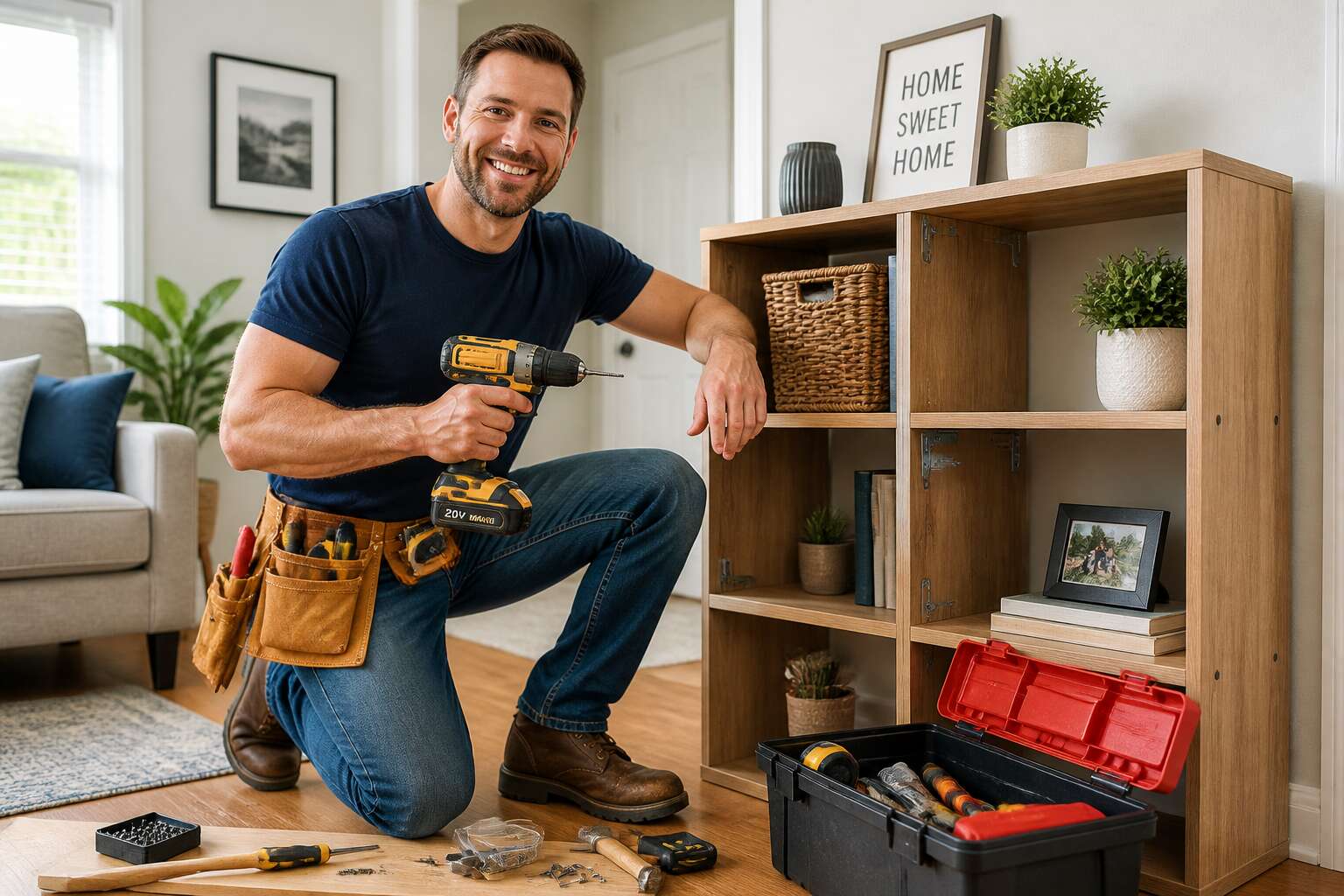
Handyman responsibilities shift when assembling furniture and cabinets. A flat pack looks innocent, but the cam locks and dowels demand precision. One misaligned shelf pin can make a bookcase wobble. Cabinet doors are worse; they mock you with subtle gaps.
Consider the spirit level. It reveals what screws try to hide. When a cabinet sits on an uneven floor, the shim becomes your best friend. Insert it, tap it, check again. The difference between sturdy and leaning is often a fraction of a millimeter.
- Failing to pre-drill pilot holes splits the particleboard
- Forgetting which side the hinge goes on causes rework
- Overlooking the anti-tip bracket creates a hazard
Each assembly is a small puzzle. Getting it right means the drawer slides and the door closes with a soft click. That is the quiet reward of a job done with care.
Installing Shelves, Curtain Rods, and Artwork
The wall looks solid, but behind the plaster lies a maze of studs and wiring. That is where handyman responsibilities expand beyond simple drilling. I always check for studs first, then measure twice because a misplaced bracket means a crooked rod or a fallen frame.
For curtain rods, the bracket height must clear the window trim. For artwork, a single nail fails on heavier pieces. Use two hooks spaced according to the frame’s hanging wire. The wall type decides the anchor. A toggle bolt suits hollow drywall, while a masonry plug handles brick.
Watch for these common slips:
- Bracket weight ratings ignored
- Drilling near live wires
- Skipping expansion gaps
The shelf must be level, so you step back and look again. That patience defines handyman responsibilities.
Preventative Maintenance Checks
Replacing HVAC Air Filters
Energy auditors estimate that a clogged air filter can raise cooling costs by nearly 15 percent. In South African homes, HVAC systems often run year round, so this component matters. Filter changes sit within handyman responsibilities.
The filter sits between the return duct and blower. Dirt raises static pressure, strains the motor, and overheats the heat exchanger. I have seen filters so clogged that the blower motor burned out weeks later! Replacing a standard filter every 90 days, or every 30 days with pets, prevents these failures. Higher MERV ratings filter better but need more frequent swaps.
Clear signs a filter needs attention:
- Dust collecting around supply vents
- A whistling noise near the return grille
- Electricity bills climbing without extra usage
This task protects the compressor and the evaporator coil. In a country with high ambient dust and load shedding stress, it is among the most practical handyman responsibilities.
Testing Smoke and Carbon Monoxide Detectors
Smoke detectors save lives, but only when they work. Testing takes seconds, yet many homeowners skip it. South African homes face specific pressures: load shedding strains electrical systems, and backup generators can produce carbon monoxide. Detectors need monthly checks, especially where power outages are frequent.
A solid handyman responsibilities checklist includes:
- Pressing the test button on every unit
- Replacing batteries twice yearly
- Verifying manufacture dates, since detectors expire after ten years
- Clearing dust and cobwebs from sensor vents
During a recent inspection, I found a detector with a dead battery and dust sealing the vents. The homeowner had no idea! Carbon monoxide detectors deserve the same attention, given that generator use during load shedding increases poisoning risk. A minute of testing prevents tragedy.
Inspecting Plumbing for Leaks
Water moves with quiet persistence. A slow leak behind a wall works unseen, softening timber and staining plaster long before it announces itself. Preventative plumbing inspections catch these intrusions early, and they sit squarely within handyman responsibilities. In South African homes, where water is both scarce and costly, a neglected drip carries a heavy price.
The signs are modest but telling:
- Visible pipes under sinks showing moisture or white mineral residue
- Warped or discoloured skirting boards near bathrooms
- A water meter that creeps forward while everything is off
Each one indicates trouble. Addressing them requires no demolition, only observation and timely intervention. The handyman who checks these details prevents a flood before it ever arrives.
Sealing Gaps and Weatherproofing Entry Points
A small gap in a door frame can cost more than comfort. It lets in moisture, dust, and insects, and it steals the cool air from your home. In South Africa, where energy prices climb steadily, sealing these entry points falls directly under handyman responsibilities. The work is simple, but the effect is lasting.
- Renewing the rubber strips on sliding doors
- Applying caulk around window sills
- Replacing the brush seal at the bottom of a garage door
I have seen homes that felt cooler and quieter after a single afternoon of weatherproofing. The job does not demand expensive tools, just a careful eye and deliberate hands. This is preventative maintenance at its leanest.
Specialty Repair Skills
Troubleshooting Electrical Outlets and Switches
Electrical outlets and switches often fail in ways that escape the untrained eye. A buzzing socket or a switch that feels warm to the touch signals more than age. These warning signs separate routine handyman responsibilities from urgent safety interventions.
Testing a receptacle requires a multimeter and a steady approach. You check voltage at the terminal, inspect for loose connections, and trace the circuit back to the breaker. For switches, the process involves removing the faceplate, verifying the wiring, and confirming the toggle mechanism still functions.
- Loose terminal screws cause intermittent power loss.
- Discoloured outlets indicate overheating.
- Flickering lights often point to worn switch contacts.
Each repair demands precision and respect for the live current. In South Africa, where load shedding stresses electrical systems, these checks become even more critical. Knowing when to stop and call a certified electrician remains the most important of all handyman responsibilities.
Regrouting Tile and Replacing Caulk
Grout and caulk do more than finish a tiled surface. They form the waterproof seal that keeps moisture from creeping behind walls and under floors. Regrouting worn or missing joint lines, then replacing cracked caulk around basins and bathtubs, counts among the handyman responsibilities South African homeowners rely on to protect bathrooms from persistent damp.
The work is straightforward but demands patience. Old grout must be raked out with care, the joints cleaned and dried, then packed with fresh material pressed firmly into every gap.
- Cracked or hollow-sounding grout lines
- Caulk that peels or darkens in patches
- Floor tiles that shift under pressure
Removing old caulk requires a sharp blade to cut the bond, followed by a thorough wipe of the edge. The new bead must be laid in a smooth, unbroken strip. Doing it correctly prevents the slow damage that leads to rotting substrates and costly renovations.
Applying Paint, Stain, and Protective Coatings
Applying paint, stain, and protective coatings is a common handyman responsibility. A fresh coat seals surfaces against moisture, UV rays, and abrasion. In South Africa, coastal salt and harsh sun demand the right product for each material.
Preparation comes first. I scrape loose paint, sand rough edges, and wipe away dust. Timber benefits from a penetrating oil stain that preserves the grain. Metal needs a rust-inhibitive primer and an enamel topcoat. Using the wrong finish leads to rapid peeling.
- Test surfaces for moisture before sealing
- Apply thin coats and let each dry
- Use UV-resistant products outdoors
A well-sealed doorframe or sill resists rot. This simple work keeps your home protected from expensive damage.
Adjusting Door Locks and Rekeying Hardware
Specialty repair skills often separate a seasoned handyman from the rest. Among them, adjusting door locks and rekeying hardware demands a meticulous touch. A misaligned strike plate causes sticking and wear. Rekeying changes the internal pins, rendering old keys useless. This task is precise, but a professional handyman responsibilities include mastering it.
Consider a door that sags on its hinges. The latch no longer meets the keeper. I adjust the strike plate, file the opening slightly, and test the action. For rekeying, I remove the cylinder, replace the pins, and reassemble. The lock works like new.
- Check for loose screws on the faceplate
- Verify the key turns smoothly before finishing
- Lubricate with graphite, not oil
These steps ensure security and smooth operation. In South Africa, where security is paramount, this service is invaluable. It gives homeowners confidence without replacing expensive hardware.
Fixing Drywall Anchors and Molding
A plastic anchor that spins free in the plasterboard is a common failure. The hole widens and the screw loses all grip. Part of handyman responsibilities is fixing this cleanly, so your towel rack does not end up on the floor.
I remove the ruined anchor with pliers, then pack the hole with a larger, ribbed anchor designed for stripped openings. For molding, I work with a sharp chisel to trim joints and use a brad nailer for attachment.
- Inspect the molding for rot before reattaching
- Pre drill to avoid splitting the wood
Humidity in coastal South Africa makes molding swell and crack. A proper fix involves sanding, priming, and a fresh bead of caulk. That is the kind of detail homeowners appreciate.




0 Comments