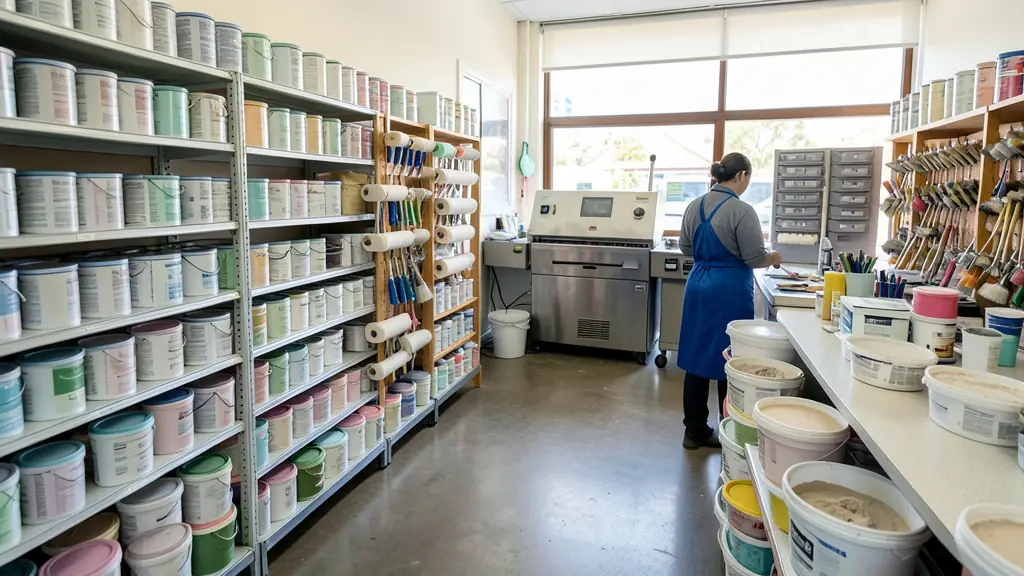
The right paint supplies matter as much as the painter. HandymanService.co.za is a free quote-request service for South Africa. Tell us what you are painting, inside or out, and we pass your request to independent paint shops and suppliers who quote you directly. We do not sell paint and we never give prices. There is no fee and no obligation to accept a quote. Compare a few replies on the same list, then choose the supplier that suits your walls, your colour scheme and your timing.
Choosing the right paint
Paint types differ by surface and weather, so match the tin to the job.
- PVA and acrylic: interior walls and ceilings, usually in matt or low sheen.
- Exterior acrylic: plastered walls that face sun, rain and Highveld hail.
- Enamel: doors, window frames, burglar bars and trim.
- Roof paint: IBR, tiles and fibre-cement, which resists heat and fading.
Ask the supplier about damp-resistant and mould-resistant options for bathrooms and coastal homes.
Textured finishes, waterproof wall coatings and ceiling paint are separate lines, and a good shop will explain the difference between a cheap and a premium tin in terms of coverage and durability rather than only colour.
Primers, fillers and prep materials
Good prep is half the result. A sealer or primer helps new plaster and bare wood hold paint, while a bonding primer grips shiny surfaces. Fillers repair cracks and holes, and flexible products handle settlement cracks better than rigid ones.
Do not forget sandpaper, masking tape, dust sheets and scrapers. If a wall has damp, treat the cause first, because paint alone will bubble and peel again. A supplier can advise on damp-proof sealers once they see a photo.
Wire brushes and rust converters help on gates, burglar bars and roof sheets. Old flaking paint must come off before new paint goes on, and any paint made before 1980 may contain lead, so wear a dust mask and wet the surface before you scrape.
Rollers, brushes and tools
Cheap rollers shed fluff and leave a rough finish. Pick the roller nap to match the wall: short for smooth plaster, longer for textured or face brick. Angled brushes cut in neatly along edges, and extension poles save climbing.
A tray, a stirring stick and a few spare roller sleeves complete the kit. Many shops also hire or sell spray gear for big exterior walls, though spraying needs careful masking of windows, gutters and plants.
Buy a little extra of each size, since a roller sleeve that has dried out is wasted. Wash tools straight after use and store unused paint upright in a cool room.
Estimating litres and what affects the quote
Work out the wall area and the number of coats. Most paint tins state a coverage per litre, but rough or thirsty surfaces need more. Dark colour changes also need extra coats. Shops can tint to any colour code, and the quote depends on paint type, brand, litres, tinting and delivery. We never show prices. Add the room sizes, the surface type and your delivery address to your request.
Comparing paint supplies quotes
Prices for paint supplies move with stock levels, transport costs and the brand you choose. When quotes arrive, check:
- Exact product: the brand, size, grade or colour, so every quote is for the same thing.
- Quantities: the price per unit, pack or square metre, and whether a full pallet or box is cheaper.
- Stock and delivery: in stock or on order, delivery to site or collection, and any off-loading charge.
- VAT and returns: whether VAT is included, how long the price holds and whether unused stock can go back.
What to include in your request
- Measure wall areas and the number of coats.
- Describe each surface: plaster, wood, metal or tile.
- Give the colour code or send a sample photo.
- Mention damp, mould or peeling you need to treat.
- State whether you need delivery or will collect.
Frequently asked questions
How much paint do I need for a room?
Measure wall height and total wall length, then subtract doors and windows. Check the coverage on the tin and allow for two coats. Rough or new plaster uses more. Give these measurements in your request and the supplier can confirm the litres.
Can the shop match an existing colour?
Most paint shops can scan or match a dry chip from your wall. Bring a small piece or a colour code. Matching old, faded paint is never perfect, so many people repaint a whole wall to avoid patches.
What paint suits a roof?
Use paint made for roofs. Corrugated iron needs a rust-treating primer first, and concrete tiles need a clean, sealed surface. Ask the supplier which system fits your roof type and its age, and how many coats it needs.
How do quotes work and what do they depend on?
You send one form and independent suppliers reply directly. There is no fee and no obligation. The quote depends on paint type, brand, litres, tinting and delivery. We never see or set the figures, so compare several replies.
Paint Supplies by province
- Paint Supplies Gauteng
- Paint Supplies Mpumalanga
- Paint Supplies North West
- Paint Supplies Limpopo
- Paint Supplies Northern Cape
- Paint Supplies Free State
- Paint Supplies KwaZulu-Natal
- Paint Supplies Eastern Cape
- Paint Supplies Western Cape
Paint Supplies by city and town
- Paint Supplies in Johannesburg
- Paint Supplies in Pretoria
- Paint Supplies in Centurion
- Paint Supplies in Midrand
- Paint Supplies in Sandton
- Paint Supplies in Randburg
- Paint Supplies in Roodepoort
- Paint Supplies in Krugersdorp
- Paint Supplies in Randfontein
- Paint Supplies in Germiston
- Paint Supplies in Boksburg
- Paint Supplies in Benoni
- Paint Supplies in Kempton Park
- Paint Supplies in Alberton
- Paint Supplies in Vanderbijlpark
- Paint Supplies in Vereeniging
- Paint Supplies in eMalahleni (Witbank)
- Paint Supplies in Middelburg
- Paint Supplies in Secunda
- Paint Supplies in Mbombela (Nelspruit)
- Paint Supplies in Rustenburg
- Paint Supplies in Brits
- Paint Supplies in Klerksdorp
- Paint Supplies in Potchefstroom
- Paint Supplies in Polokwane
- Paint Supplies in Tzaneen
- Paint Supplies in Lephalale
- Paint Supplies in Kimberley
- Paint Supplies in Kathu
- Paint Supplies in Upington
- Paint Supplies in Bloemfontein
- Paint Supplies in Welkom
- Paint Supplies in Sasolburg
- Paint Supplies in Durban
- Paint Supplies in Pinetown
- Paint Supplies in Pietermaritzburg
- Paint Supplies in Richards Bay
- Paint Supplies in Newcastle
- Paint Supplies in Ladysmith
- Paint Supplies in Gqeberha (Port Elizabeth)
- Paint Supplies in East London
- Paint Supplies in Kariega (Uitenhage)
- Paint Supplies in Cape Town
- Paint Supplies in Bellville
- Paint Supplies in Paarl
- Paint Supplies in Stellenbosch
- Paint Supplies in George
- Paint Supplies in Worcester