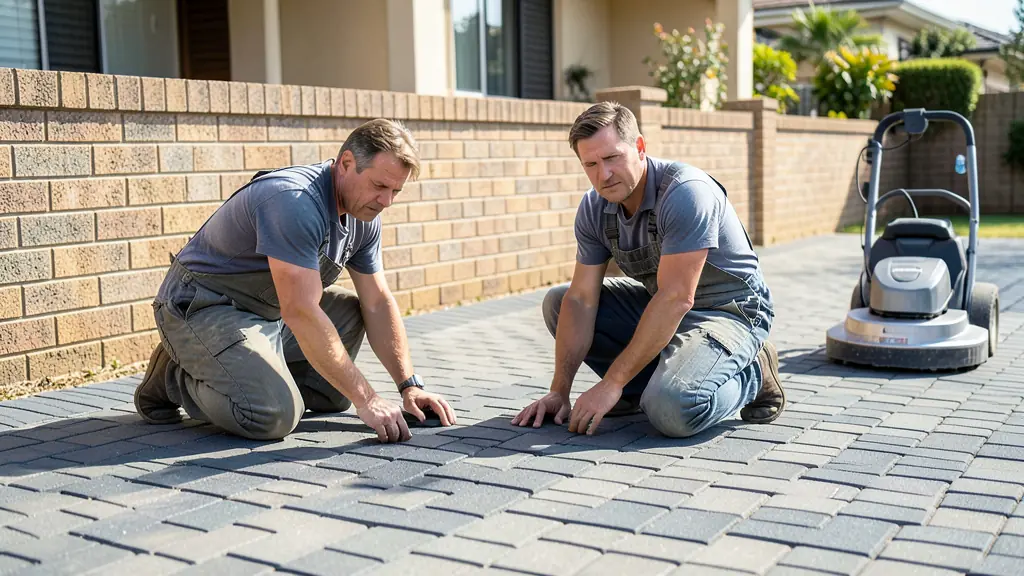
A good paving calculator saves you from ordering too few pavers and finding the pallet is sold out in your colour. This one works from the area, the paver size you enter and an allowance for cuts. It then adds bedding sand, G5 base material, joint-filling sand and the length of edge restraint. All figures are estimates, so check them against your supplier's advice before you order.
How the paving calculation works
The calculator multiplies length by width to get the paved area. It divides one square metre by the face area of one paver to get pavers per square metre. A standard 200 × 100 mm brick paver gives 50 per square metre. It then adds your extra for cuts, 5% by default.
- Bedding sand: area times bed depth, plus 15% because the sand compacts.
- G5 base: area times base depth, plus 30% because loose material compacts down.
- Joint sand: about 4 kg per square metre.
- Edge restraint: the full perimeter, in metres.
How to measure and plan
Measure the longest length and widest width. For an odd shape, split it into rectangles, work each one out and add the pavers together. Curves and herringbone patterns waste more, so raise the cuts allowance to 8 to 10%.
Pick the base to suit the traffic: none for a patio on firm ground, 100 mm of G5 for paths and patios, 150 mm for a car driveway and 200 mm for heavy vehicles or soft clay. Pavers of 60 mm suit paths and cars. Use 80 mm where heavier vehicles will drive.
Slope the paving away from the house. A fall of about 1 in 60, or 17 mm per metre, clears rain without being noticeable.
Practical tips for South African conditions
Sand and G5 are sold by the cube (m³) or ton, and many suppliers will deliver. Compare the cubes on your result with what the yard offers. Order pavers from one batch, because colours vary between batches.
- On the Highveld, summer storms can wash out an unfinished bed. Cover the sand and work in dry spells.
- Coastal areas and heavy clay soils often need a deeper base, so ask the supplier.
- In the Western Cape, laying in the dry summer months is easier on the base.
When to call a pro
Large driveways, steep sites, drainage problems and ground that has settled before are worth leaving to an experienced paving contractor. A poor base is the usual reason pavers sink. Walls or retaining work at the edges may need municipal approval, so ask your municipality first.
HandymanService.co.za does not lay paving or sell pavers. Use the form on this page to ask independent paving contractors and suppliers for a free quote.