Water finds every gap in a building, and a failed seal can damage ceilings, walls and cupboards before you see it. HandymanService.co.za is a free quote-request service for South Africa. Tell us about your waterproofing job, whether a flat roof, balcony, shower or damp wall, and we pass the request to independent waterproofing companies and handymen who quote you directly. We do not do the work and we never give prices. There is no fee and no obligation to accept a quote.
Where waterproofing is needed
Waterproofing protects any surface that meets water and cannot shed it quickly.
- Flat roofs and slabs: concrete roofs, extensions and carports with a low fall.
- Parapets and balconies: the joints and upstands where most leaks begin.
- Showers and wet rooms: membranes under the tiles.
- Retaining walls and basements: below-ground walls pushed by wet soil.
- Planters and water features: raised beds against a wall.
Roof waterproofing systems
Several systems suit roof waterproofing, and the right one depends on the roof and the weather it faces.
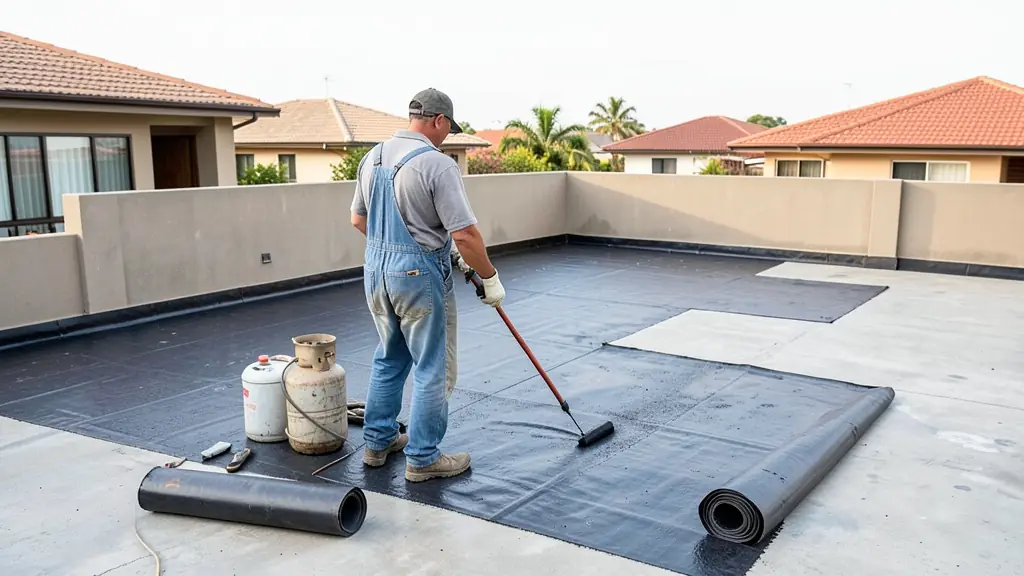
- Torch-on membrane: bitumen sheets heated and bonded to the slab. Durable and common on flat roofs.
- Liquid rubber and acrylic coatings: brushed or rolled on, good for awkward shapes.
- Polyurethane and cement-based coatings: used on balconies, showers and below ground.
Some systems need a protective top coat, since sunlight on the Highveld breaks down bare bitumen.
Ask each contractor which system they propose and why. A guarantee period in writing is worth requesting.
Damp, rising damp and cracks
Not every damp patch is a roof problem. Rising damp comes from the ground and shows as a tide mark low on a wall. Penetrating damp comes through a wall after driven rain. Condensation forms on cold surfaces in poorly ventilated rooms. Each needs a different fix.
Clay soils on the Highveld move, and settlement cracks let water in. A contractor should fix the crack and find the source before painting over a stain. Leaking gutters and blocked drains often cause damp that looks like a wall fault.
Painting a damp wall without treating the cause only hides the problem for a season.
What affects the quote
We do not show prices. The main cost drivers are the area to be covered, the system chosen, the state of the surface and how easily the crew can reach it. Old coatings may need to be stripped. Cracks, drains and upstands need preparation. A flat roof with plant, paving or a garden needs extra care.
Tell us what is leaking, how old the building is and whether you see damp indoors. Add photographs and rough measurements. Mention if you rent or live in sectional title, since the owner or body corporate may need to approve the work.
Flat roofs need regular checks. Clear leaves from outlets, look at the seams after heavy storms and report small blisters early, because a small repair now avoids a full recoat later.
Comparing quotes for waterproofing
The lowest figure is not always the best deal. When your quotes arrive, check:
- Scope: exactly what is included, from preparation and materials to rubble removal and clean-up.
- Materials: the brand, grade or quantity allowed for, and who buys and delivers them.
- Timing: when the work can start, how long it takes and what happens if it rains.
- Guarantee and terms: any workmanship guarantee, deposit, payment stages and how long the price holds.
What to include in your request
- Describe what is leaking and where damp shows inside.
- Give the approximate area of the roof, balcony or wall.
- Attach photographs of cracks, old coatings and drains.
- State whether the surface is concrete, sheeting or tiled.
- Say if a guarantee is important to you.