Get a quote
TL-11

Electricity Cost Calculator: What Does an Appliance Cost to Run?

Enter the power rating, hours of use and your tariff to see the units used and the running cost. It helps you compare a geyser, heater, pool pump or any other appliance.

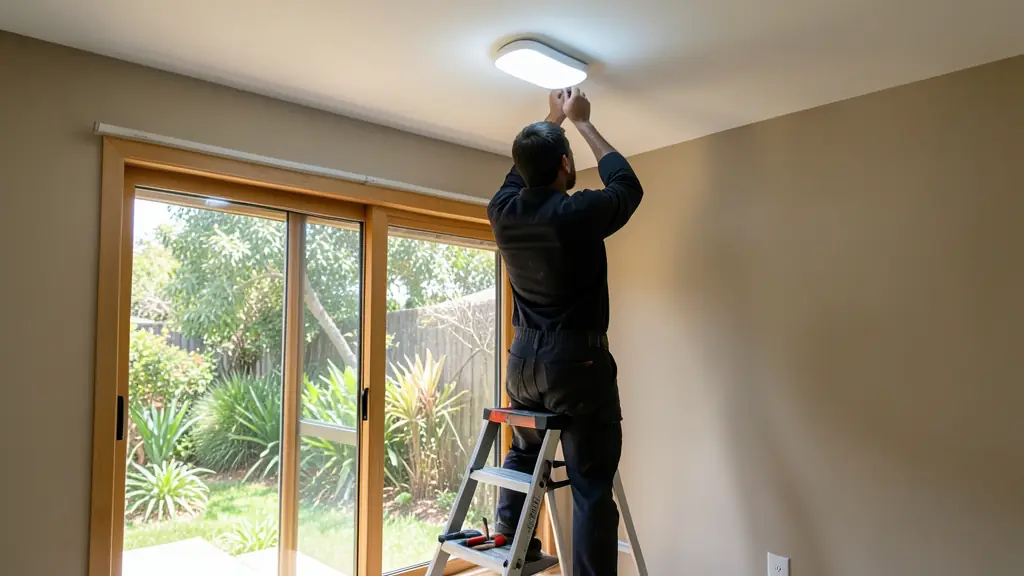
An electrician fitting a ceiling light in a South African home

Appliance Electricity Cost Calculator

Change any measurement and the answer updates as you type.

Measuring sheetTL-11
On the rating plate; geyser element usually 3,000–4,000 W
A geyser element runs about 2–4 h a day
From your bill or prepaid slip, incl. VAT

Cost per monthR 1,026.00

Power drawn
3.00 kW
Energy per day of use
9.00 kWh (units)
Energy per month
270.0 kWh
Cost per day of use
R 34.20
Cost per year
R 12,312.00
  • Fridges, freezers and geysers cycle on and off, so count only the hours the element or compressor actually runs.
  • Tariffs differ by municipality and often rise in steps as you use more units in a month.
Estimates only: confirm quantities with your supplier or contractorTL-11

An electricity cost calculator shows which appliances drive up your bill. Enter the power in watts from the rating plate, how many you run, the hours per day, the days per month and your tariff per unit. The result is the energy in kWh and the cost per day, month and year. The tariff shown is only an example, so replace it with the one on your bill.

How the calculation works

Power in watts is divided by 1,000 to get kilowatts, then multiplied by the number of appliances. Multiply by the hours on per day to get kWh (units) per day, and by the days used per month to get kWh per month. Multiply by your tariff per kWh for the cost. The yearly figure is the monthly cost times 12.

Fridges, freezers and geysers cycle on and off, so count only the hours the element or compressor actually runs. A geyser element often runs about 2 to 4 hours a day.

Typical appliance power ratings

These are ranges, not exact figures. Always check the rating plate on your own appliance.

ApplianceTypical power
Geyser element3,000 to 4,000 W
Kettle1,800 to 2,200 W
Oven2,000 to 3,000 W
Stove plate1,000 to 2,000 W
Microwave800 to 1,200 W
Iron1,000 to 2,400 W
Heater1,000 to 2,000 W
Pool pump550 to 1,100 W
LED bulb5 to 12 W
TV50 to 200 W
Wi-Fi router5 to 15 W

Practical tips and when to call a pro

Find your tariff on your municipal bill or prepaid slip. Tariffs differ by municipality and often rise in steps as you use more units in a month. In cold Highveld and Western Cape winters, heaters and geysers push usage up.

If a circuit trips, an appliance sparks or a plug gets hot, stop using it. Work on fixed wiring, such as new circuits, DB boards and plug points, must be done or supervised by a registered electrician, who issues an Electrical Certificate of Compliance. Pressing the test button on your earth leakage unit monthly is a good habit.

To save electricity, start with the biggest loads: the geyser, heaters, the oven and the pool pump. Small gadgets rarely matter much.

HandymanService.co.za does not do electrical work. Use the form on this page to get a free quote from independent electricians.

Frequently asked questions

How do I calculate the cost of running an appliance?
Divide the watts by 1,000 to get kW, multiply by the hours used to get kWh, then multiply by your tariff per kWh. The calculator does all three steps and shows the cost per day, per month and per year.
What is a kWh or unit of electricity?
One kWh, or unit, is the energy used by a 1,000 W appliance running for one hour. A 100 W TV on for ten hours uses one unit. Your bill and prepaid slips charge a tariff for each unit.
Where do I find an appliance's wattage?
Look at the rating plate, often at the back or underneath, or in the manual. If it only lists amps, multiply by the supply voltage to estimate watts. The table on this page gives ranges for common appliances only.
Why does my bill not match the calculator?
The tool uses one flat tariff and the hours you enter. Real bills include stepped tariffs, fixed charges and appliances that cycle on and off. Treat the result as an estimate and compare it with your own bill or meter readings.

More calculators and guides

Get a free quote

Tell us the job and where it is. A handyman, contractor or supplier who works in your area quotes you directly.

Job cardNo. 11124
  1. 1Tick the jobs and describe the work.
  2. 2We pass it to someone who works near you.
  3. 3They quote you. Free, no obligation.
Tick what needs doing (optional)

Free and no obligation. By sending you agree that we may share your request with a suitable handyman, contractor or supplier. See our privacy policy.

Get a free quote